PCVFL
(Precision Coupled Visual Fault Locator)
|
|
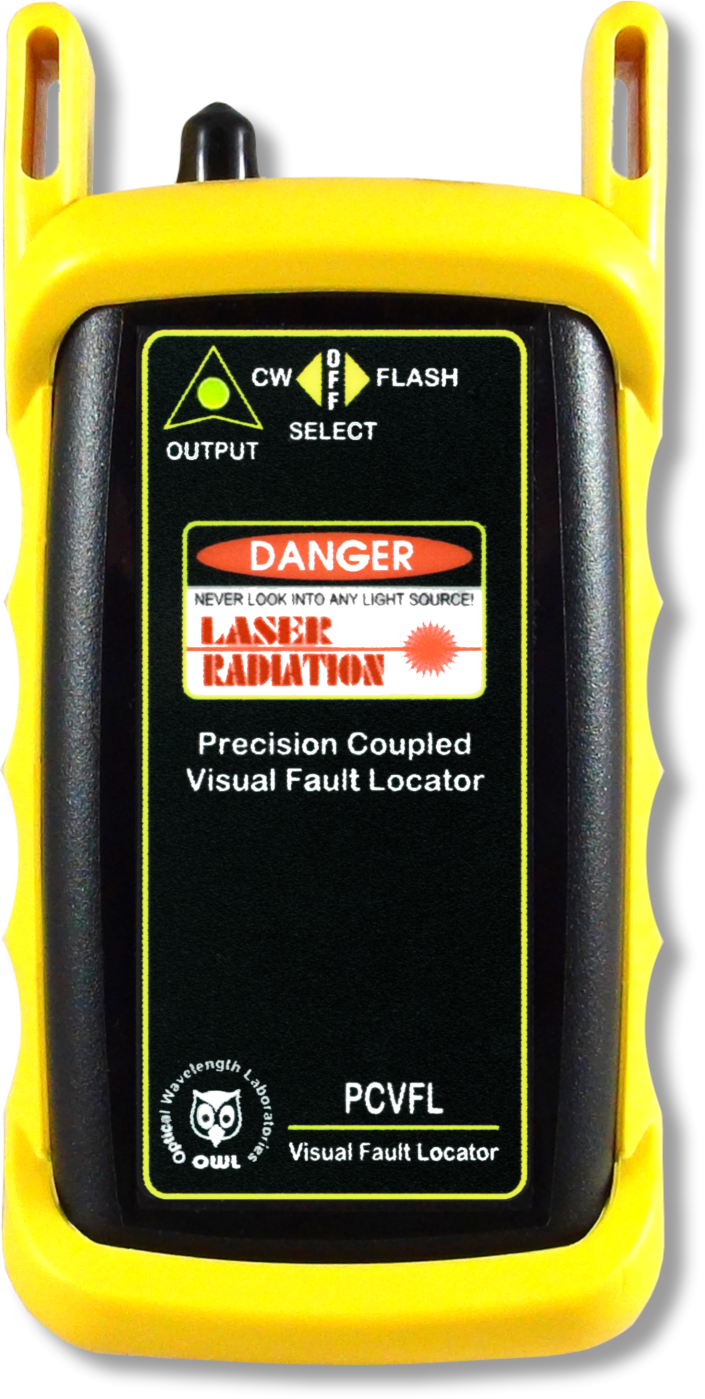
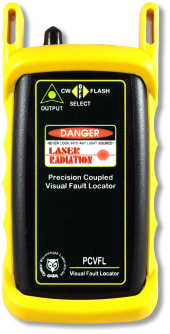
PCVFL (Precision Coupled Visual Fault Locator) is a light-weight, hand-held tool used to quickly
troubleshoot faults in the continuity of both single mode and multi-mode fibers, especially at
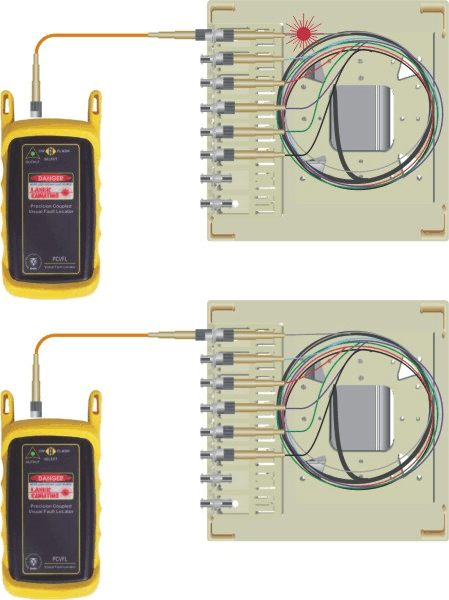
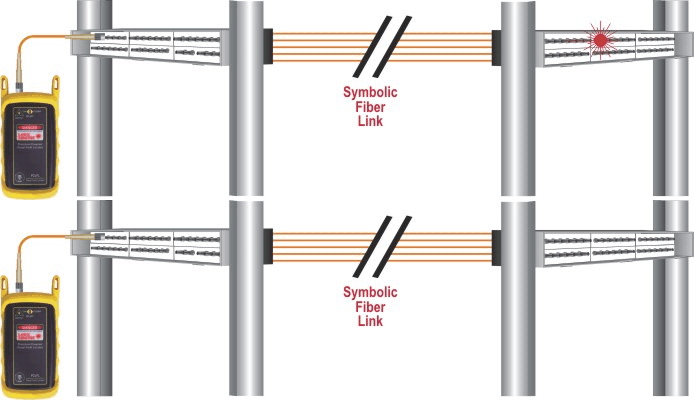
fiber launch points or in OTDR dead zones. A high intensity visible red laser beam is precision-coupled
into the optical fiber; breaks and micro-bends in the fiber deflect the red light into the
fiber jacket, producing a red glow at the point of the fault.
|
 |
KEY SPECIFICATIONS
- Visual Range up to 5 km (3.1 miles) in both multimode and singlemode fibers
- Optical Output: 0dBm red laser
- CW Mode - 15 hours use on one 9v battery
- Pulsed Mode - 120 hours use on one 9v battery
- Pulsed at 6 Hz w/12.5% duty cycle
- Low battery indicator
- Handheld /Lightweight
Typical battery life in CW mode is 15 hours, and the short 12.5% duty cycle in pulsed mode extends the
battery life to 120 hours of continuous use.
Unlike standard light pens, the PCVFL precision-coupled visual fault locator (VFL) is optimized for
fiber optics. An optical ball lens placed near the laser output focuses the red laser light for optimum
coupling into optical fibers (often most pen-style laser pointers do not have this feature), and special
electronics prevent the red laser from burnout (a common problem with pen-style red laser pointers),
increasing the life of the VFL.
The PCVFL ships standard with a 2.5mm universal connector port.
|